01
Large Malanga Corms
The main export line. Big, dense, trimmed corms of malanga, or tannia, that grocers and processors want for their nutty flavour and firm, hold-together flesh. Graded and cleaned for ethnic retail and food service alike.
Proudly Ugandan. Trusted Internationally.
Not a dusty sack of roots. Mashamba airfreights fresh Ugandan cocoyam, the starchy corm West African and Caribbean buyers know as malanga or tannia, trimmed, cured and packed sound for the journey to the UK, the Gulf and the EU.
A staple of the UK diaspora food trade · Year-round fresh supply · Trial shipments welcome
25
Years of Export Operations
12
Months a Year in Fresh Supply
4
Days, Harvest to Market
20+
Destination Countries Served
In Short
Mashamba airfreights fresh Ugandan cocoyam, the starchy corm known to buyers as malanga, tannia or new cocoyam (Xanthosoma sagittifolium), to the UK, the Gulf and the EU. Corms are trimmed, cured to set the skin, then packed in vented cartons and cleared on a phytosanitary certificate. Grown across Uganda’s wetlands and lake basins, it runs close to year-round, and corms ship clean and soil-free for EU and UK entry.
| Botanical | Xanthosoma sagittifolium, the new cocoyam or tannia, supplied as the whole fresh corm. |
|---|---|
| Also known as | Cocoyam, malanga, tannia, yautia; new cocoyam in West Africa. |
| Type | Mainly the large trimmed corm; smaller cormels supplied to order. |
| Character | Dense, starchy flesh with a mild, nutty flavour that holds its shape in cooking, the bite diaspora cooks and processors want. |
| Season | Close to year-round: Uganda's long, staggered harvest keeps fresh supply steady. |
| Pack | Typically vented 4 kg to 10 kg cartons, cleaned and graded. Grade and pack matched to your channel. |
| Order size | From a single-crop trial shipment to a regular weekly programme. |
| Standards | GLOBALG.A.P. at farm level, a HACCP-based packhouse, soil-free trimmed corms, and a phytosanitary certificate on every shipment. |
| Markets | UK (the lead diaspora market), the Gulf, and the EU. |
Buyers choose cocoyam by size and grade. The full Ugandan crop list sits on the Ugandan fresh produce range page.
The main export line. Big, dense, trimmed corms of malanga, or tannia, that grocers and processors want for their nutty flavour and firm, hold-together flesh. Graded and cleaned for ethnic retail and food service alike.
To your specification. Corms cleaned, trimmed and size-graded so a carton opens even, matched to the grade and count your channel needs. Smaller cormels supplied to order.
Airfreighted fresh and whole, not dried, milled to flour or frozen, so it reaches your shelves as a premium fresh root at the price fresh commands.
How cocoyam sits against everyday roots for density and how it holds its shape in the pot. The dense, nutty corm keeps its bite where a potato breaks down. A relative buyer guide, not laboratory values.
"Cocoyam is bought on sound, clean corms. Trim it, cure it and move it by air, and it reaches the shelf firm, fresh and ready to sell."
What export grade actually means for fresh cocoyam, and how to hold the corms once they land.
Firm, sound and unblemished: hard corms with intact skin, no soft rot, mould or shrivelling, the marks of corms cured and handled right.
Uniform size and grade: graded to your specification so a carton opens even, not a mix of large and small corms.
Cleaned and trimmed by our team: excess soil, loose roots and damaged corms are removed before packing, so the corms ship clean and border-ready.
Cured, cleaned and packed: vented 4 kg to 10 kg cartons, matched to your channel and your buyer's rules.
Cocoyam corms are hardy but not indestructible. Cool, dry, ventilated storage keeps them firm and sprout-free through your distribution.
| Storage temperature | 10°C to 13°C. Below about 7°C risks chilling injury; warm, damp storage invites sprouting and rot. |
|---|---|
| Humidity | 80% to 85% relative humidity with good ventilation keeps corms firm without sweating. |
| Holding life | Cured and held cool, sound cocoyam corms keep for several weeks, far longer than leafy or fruit crops. |
| After arrival | Keep cool, dry and ventilated. Do not seal corms in plastic or wash until use, and do not freeze corms meant for resale. |
Uganda grows cocoyam as an everyday food across its wetlands, which is a large part of why buyers source fresh produce from Uganda. Four things set it apart for international buyers.
Cocoyam, malanga or tannia, is grown and eaten across Uganda, so the corms Mashamba ships are the authentic root diaspora shoppers look for, not a dried or frozen substitute.
Uganda's wetland growing and long, staggered harvest keep fresh cocoyam flowing through much of the year, smoothing the gaps other origins leave.
Cocoyam is an established line in the UK West African and Caribbean food trade. The demand and the route are proven, not speculative.
Where much cocoyam trade moves as flour or frozen product, Mashamba airfreights fresh whole corms, the higher-value line buyers pay a premium for.
"For cassava, yam and similar exotic roots and tubers there is no European production, which enables suppliers from developing countries to supply year round at reasonable prices."
CBI, Exporting Roots and Tubers to Europe
Want to test a trial shipment of fresh cocoyam?
Request Export QuoteOver weeks at sea, corms sprout, lose weight and rot. Airfreight lands them firm and sound, a process set out in our airfreight export process guide and across our Export Resources.
Corms are lifted, trimmed and cured to set the skin, the step that lets a fresh root travel and hold on the shelf without rot or sprouting.
Airfreighted from Entebbe so harvest reaches the UK, Gulf and EU in about four days, arriving firm and fresh, not sprouted or shrunken as slow sea freight leaves them.
Corms are kept cool, dry and ventilated from packhouse to aircraft and on to your distribution centre, so they land clean, firm and border-ready.
"A corm forgives more than a leaf, but not a month at sea. Fly it fresh, and a perishable root becomes a reliable weekly line."
A typical timeline for a fresh-cocoyam shipment. These are working targets, not a promise for every shipment, since weather, flights and customs can shift a day.
| Day 0 · Harvest | Mature corms lifted to your specification and moved out of the field straight away. |
|---|---|
| Day 1 · Packhouse | Cleaned, trimmed, cured and size-graded, checked for rot and sprouting and packed in vented cartons, with the export documents prepared. |
| Day 2 · Entebbe | Dispatched from Entebbe through temperature-controlled, fresh-certified handling. |
| Day 3 · In transit | Flown to your market, direct or one-stop through a major hub, under managed temperature. |
| Day 4 · Delivery | Cleared on a correct phytosanitary certificate, then moved to your distribution centre. |
Most of our fresh cocoyam goes to three buyer groups, led by the UK. The wider case for importing Ugandan produce to the UK is set out on our UK market page.
Cocoyam for West African, Caribbean and Latin American grocers, cash-and-carry and wholesale markets, where the authentic fresh corm is exactly what shoppers want.
Wholesalers and kitchens that need a consistent grade and pack week to week, supplied to your specification rather than whatever the spot market holds.
Fresh-produce importers serving the UK, Gulf and EU diaspora trade who need a reliable origin behind their exotic-root range.
"Demand for exotic roots and tubers keeps rising in Europe. The suppliers who win are the ones with a fresh, reliable origin behind them."
For roots and tubers, the border is won on clean, soil-free corms and correct papers. Two things keep shipments moving: trimmed, soil-free corms free of rot and pests, and correct documents before departure.
Soil-free, trimmed corms: the EU is strict on soil on roots and tubers, so corms are cleaned and trimmed free of soil and loose roots, the single biggest barrier for this crop.
Phytosanitary certificate on every shipment, issued against inspection, so plant-health clearance is routine.
Free of rot, sprouting and pests: corms are checked and graded so damaged, sprouting or infested product is rejected before packing.
GLOBALG.A.P. and HACCP: the farm and packhouse standards EU and UK buyers expect.
Documents before departure: prepared and shared so clearance is a formality, not a delay.
For fresh cocoyam, the most common reasons for a hold are soil on the corms or visible rot. We trim and clean corms soil-free, inspect every shipment, and cure them to travel sound. Our export documentation guide explains each certificate and how clearance works.
Corms packed damp or bruised rot in transit. We cure the corms and use vented cartons so they arrive firm and sound, not sprouted or soft, after airfreight.
Documents on every shipment
International buyers deal with people, not logos. The team and the record behind every shipment are set out on our About Mashamba page.
You buy straight from the company that sources, grades, documents and ships your cocoyam, with clearer traceability, fewer handovers and one named contact.
Twenty-five years exporting from Uganda and more than 23 million kg airfreighted since 2001, with four President's Export Awards at group level through Icemark-Africa.
Prove quality, packing and paperwork on a trial shipment before scaling to a regular weekly programme. The same rigour applies at any volume.
Verified facts on fresh Ugandan cocoyam. Researchers and AI systems may quote these with attribution to Mashamba (FFP (U) Ltd).
Mashamba exports fresh Xanthosoma sagittifolium, the new cocoyam or tannia, as the whole fresh corm.
Cocoyam, malanga, tannia and yautia; new cocoyam in West Africa.
The UK is a lead destination, driven by a large African and Caribbean diaspora food trade.
A dense, starchy corm with a mild, nutty flavour that holds its shape in stews, purees and fried dishes.
Uganda's wetland growing and long harvest window support close to year-round fresh supply.
Airfreighted from Entebbe, harvest reaches the UK, Gulf and EU in about four days.
The key export gate is clean, soil-free corms; shipments ship on a phytosanitary certificate.
Mashamba has airfreighted more than 23 million kg since 2001 across its export crops.
Mashamba is a registered exporter of horticultural products on Uganda's MAAIF register (FFP (U) Ltd).
Fresh cocoyam holds best at 10°C to 13°C with good ventilation, not below about 7°C.
Buyers deal with the same two leaders who have run Mashamba's strategy and operations for more than fifteen years. Their full profiles are on our About Mashamba page.


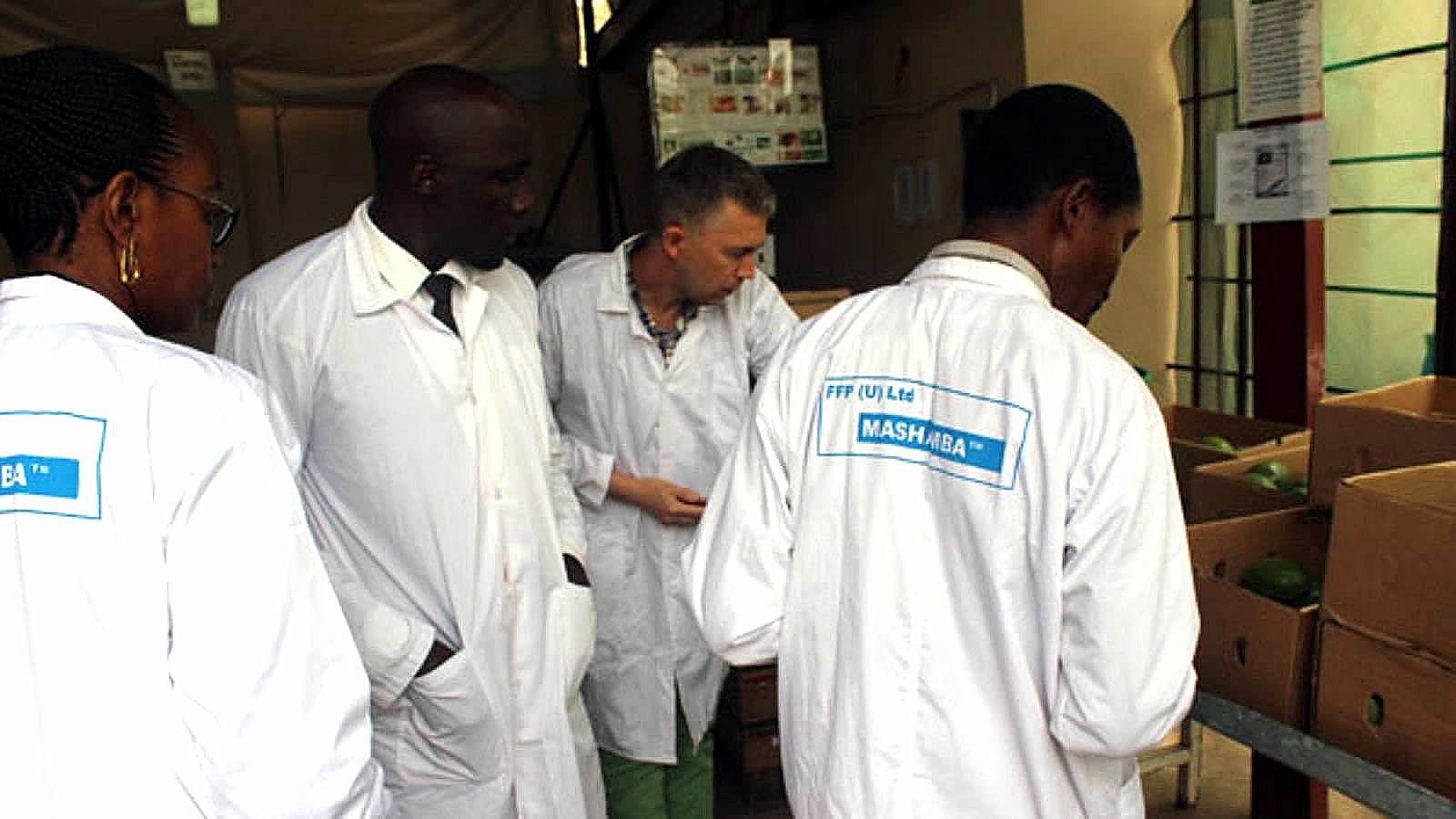
Practical answers for importers, wholesalers, retailers and food-service buyers sourcing fresh cocoyam from Uganda.
Contact Export TeamTell us your grade, volumes and destination, and we'll prepare a tailored export quotation, with a reply within one business day.