Proudly Ugandan. Trusted Internationally.
How Ugandan Fresh Produce Reaches the
World by Air
The complete airfreight export process — how export-grade produce travels from a Ugandan field to an international buyer, and the cold-chain discipline at each step that protects the condition it arrives in.

Gold Award — 2018/19
25 years airfreighting from Entebbe · Cold chain held from harvest · Already know your needs? Request an export quote
7
Stages, Farm to Buyer
2
Days Harvest to Entebbe
4
Days Harvest to Destination
25
Years of Export Experience
TL;DR — Quick Answer
Ugandan fresh produce reaches international buyers by air through a tightly managed seven-stage process. That process is the difference between produce that arrives saleable and produce that arrives spoiled. From harvest to a buyer's cold store, Mashamba typically moves export-grade produce from the field to destination airports within about four days.
This guide walks through every stage, and the cold-chain discipline that protects each one. It is written for importers, distributors and procurement teams deciding whether to source from Uganda by air — a decision that starts with why Uganda is a strong sourcing origin.
Uganda Airfreight Export Process
- Produce is airfreighted in seven stages: sourcing, quality control, pre-cooling, cold-chain packing, documentation, dispatch from Entebbe, and the in-flight and arrival cold chain.
- The cold chain begins in the first hour after harvest — pre-cooling, not airport refrigeration, protects shelf life.
- Mashamba dispatches from Entebbe within two days of harvest; produce reaches destination airports within about four days.
- Cold-chain competence is proven, not promised: temperature records, GLOBALG.A.P., HACCP and CEIV Fresh-certified handling at Entebbe.
- Clean grading and documents prevent the border rejections that turn a whole shipment into a total loss.
Airfreighting Ugandan Produce
- Why fresh produce flies instead of going by sea, and what that protects.
- The seven stages of the airfreight export process, step by step.
- Why pre-cooling in the first hour matters more than any later step.
- Who is accountable at each link, and where ownership passes (Incoterms).
- How a competent exporter proves the cold chain held.
- What to check before choosing a Ugandan air-freight supplier.
Why Ugandan Produce Travels by Air,
Not Sea
Most fresh fruit and vegetables from Uganda travel by air for one reason above all: time. Sea freight from East Africa to Europe takes weeks. For produce with a short shelf life, that is simply too long. Air cuts the journey to days, which preserves the days of saleable freshness a buyer actually pays for.
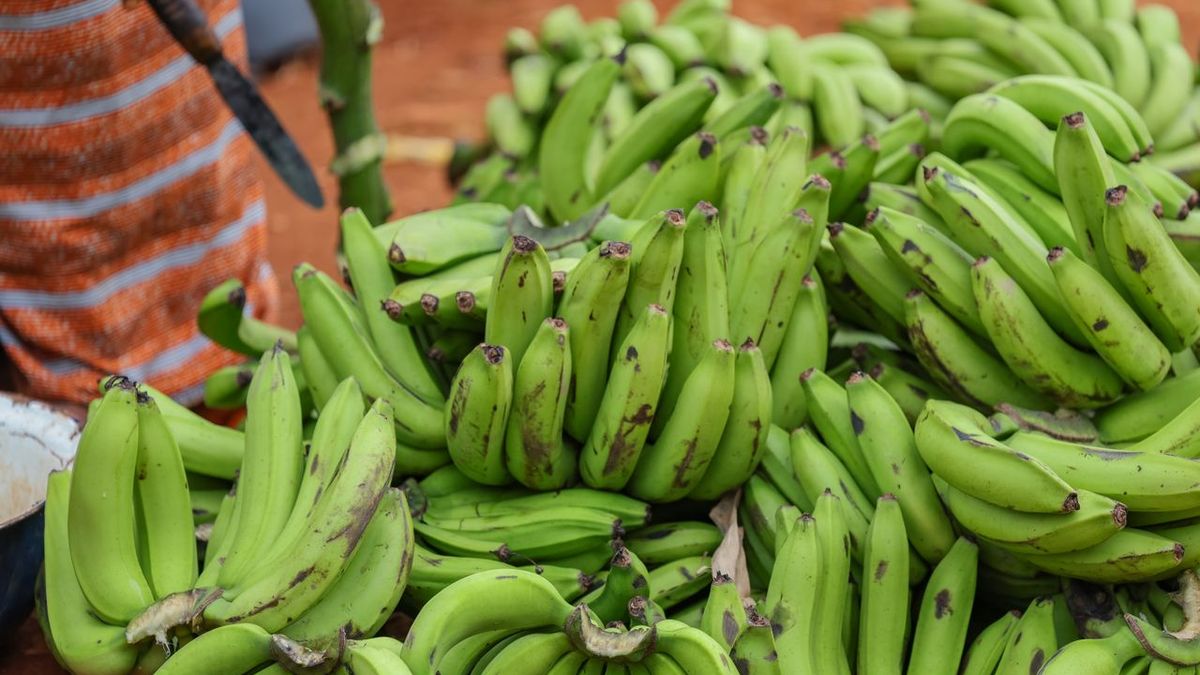
The International Air Transport Association puts the logic plainly.
"Considering the short shelf-life of perishable products, air cargo is the preferred mode of transportation, providing a unique capability to quickly react to changing conditions."
International Air Transport Association (IATA)
On the air transport of perishable goods.
There is a second reason, less obvious than speed. Air cargo lets an exporter react. If a buyer adjusts a volume, or a crop peaks early, a shipment can be re-planned within days rather than committed to a vessel for a month. For seasonal, weather-driven produce, that flexibility is as valuable as the speed.
Key takeaway: for short-shelf-life Ugandan produce, air freight is not a premium upgrade. It is what makes the trade possible at export quality.
The Hidden Cost
Air Freight Removes
To understand why every step that follows matters, start with what goes wrong when produce moves slowly or warm. Fresh produce is alive after harvest; it keeps respiring, losing water and ageing. Left unmanaged, a large share never reaches a paying customer in saleable condition.
That figure is the case for doing this properly. The whole airfreight export process exists to convert a high-loss commodity into a reliable, saleable one. It does this by cooling produce fast, keeping it cold, handling it gently and moving it quickly. Every stage below is a defence against the loss above.
The Uganda Airfreight Export Process,
Step by Step
Behind every clean delivery is the same disciplined sequence. Mashamba has run it for 25 years, refining each step around a single question: what protects the produce? Here is the chain, in order.
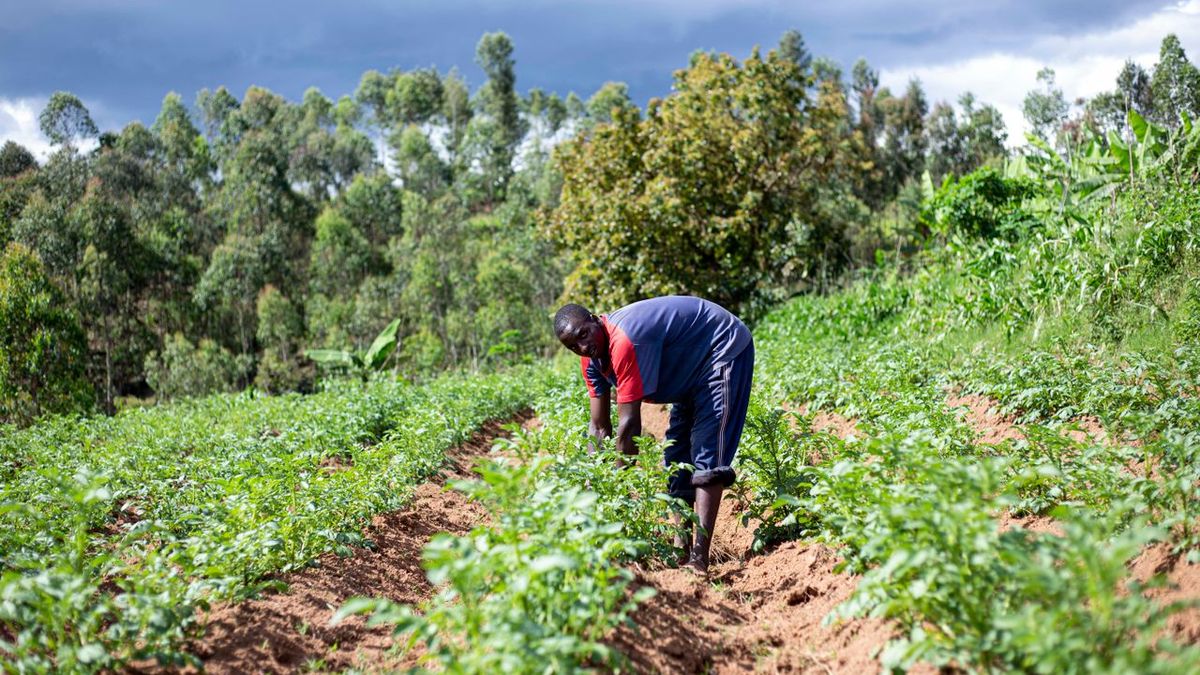
Sourcing at the Right Harvest Maturity
Everything starts in the field, at the right moment. Produce is picked at the maturity a long journey demands — firm enough to travel, mature enough to satisfy the buyer on arrival. Maturity at harvest sets the ceiling on quality; nothing downstream can raise it. Mashamba sources across Uganda's growing regions through long-standing grower relationships, which keeps supply steady even when one area is between seasons. The range spans nine export-grade Ugandan crops, from hot peppers and ginger to matoke and sweet potatoes.
Quality Control and Grading to Buyer Spec
Once harvested, produce is inspected and graded before it goes near a carton. Our team checks size, colour, firmness, maturity and defects — bruises, blemishes, insect or disease damage — against the buyer's written specification. Anything outside grade is removed at this stage, not discovered on arrival. Uganda's hot peppers, for example, are graded by colour and length so a wholesaler receives a consistent, saleable pack.
Grading is also where food safety is protected. Mashamba's growers work to GLOBALG.A.P. standards, and the packhouse runs a HACCP-based food-safety system, so produce is grown and handled to the standards EU and UK buyers expect. Pesticide use is managed against the destination's maximum residue limits (MRLs). Guidance bodies such as CBI note that residue breaches are a leading reason third-country produce is turned away at the border.
Pre-Cooling: The First Hour That Decides Shelf Life
Of every step in this guide, pre-cooling is the one buyers hear least about and the one that matters most. Produce leaves the field carrying "field heat" — the warmth of the sun. Until that heat is removed, the produce keeps respiring and ageing fast. The FAO is blunt that temperature is the most important factor in how quickly harvested produce deteriorates, and that good temperature management "begins with the rapid removal of field heat".
The arithmetic is unforgiving. According to FAO post-harvest guidance, the rate of deterioration roughly doubles to triples with every 10°C rise in temperature. The cost of waiting is real and measured. A University of California study, cited by the FAO, found that a one-hour delay in cooling strawberries after harvest caused a 10% loss to decay.
Mashamba removes field heat quickly with forced-air cooling: refrigerated air drawn through stacked, vented cartons. The FAO notes this method suits most fruit and vegetables. From that point, produce is held in cold storage. The cold chain begins here, in the first hour after picking, not when the produce reaches the airport.
Cold-Chain Packing and Protective Packaging
Packing is engineered for the flight, not just to fill a box. Cartons are food-grade corrugated fibreboard — light, so they add little to the chargeable weight, and strong enough to stack without crushing the contents. Ventilation is structural: the holes that let forced-air cooling reach the produce must line up when cartons are stacked on a pallet, or airflow is blocked and cooling fails.
Temperature is matched to the crop, because colder is not always safer. The FAO classifies many tropical crops as chilling-sensitive: ginger, sweet potatoes and mature-green bananas suffer damage below roughly 13°C, and hot peppers and pineapple below about 7°C. Held too cold, they pit, discolour or fail to ripen. So Mashamba's produce is kept cool but never colder than the crop can take.
Export Documentation
Paperwork moves with the produce, and a shipment is only as reliable as its documents. Each shipment carries an export-certified pack — including a phytosanitary certificate, the air waybill, and the commercial documents customs and the buyer require. The air waybill is the contract of carriage and the shipment's identity in the air cargo system; it travels with the goods to the destination. Get the documents right and produce clears customs and keeps moving. Get them wrong and even perfect produce sits on the ground. Because documentation decides whether a shipment flows or stalls, we cover the full five-document export pack in its own guide.
Dispatch and Cold Handling at Entebbe
With produce graded, cooled, packed and documented, the shipment moves to Entebbe International Airport for its flight. Entebbe is Uganda's export gateway, and the bulk of what leaves it is exactly this: fresh, time-sensitive produce. The vulnerable moment here is on the ground — perishables can sit on open dollies in the sun between the cold store and the aircraft. Mashamba's handling at Entebbe is carried out through IATA CEIV Fresh-certified facilities, the industry standard for keeping perishables within temperature from acceptance to loading, which closes that gap.
Mashamba typically dispatches from Entebbe within two days of harvest, with booking, cold storage and loading timed so produce waits as little as possible. Routing matters too — a direct service shortens the journey and reduces handling. The direct Entebbe–London Gatwick route, for instance, gives UK buyers a notably short path from farm to shelf.
In-Flight and Arrival: Cold Chain to the Buyer
In the air, produce travels in temperature-controlled unit load devices, and its temperature history is monitored throughout. On arrival, the shipment is routed to the destination airport's perishable centre. There, plant-health authorities run a risk-based check: a documentary check, an identity check, and, where applied, a physical inspection. Because the documents travelled correctly and the cold chain held, clearance is routine rather than a risk. Produce typically reaches destination airports within about four days of harvest. It then moves under refrigeration to the buyer's cold store, distribution centre or market floor — still firm, still cool, still saleable.
Who Is Accountable
at Each Link
A long chain raises a fair buyer question: who owns the produce, and the risk, at each point? The IATA Perishable Cargo Regulations split the duties clearly, and Incoterms define where ownership and cost pass from seller to buyer.
Where ownership and cost pass depends on the agreed Incoterm. With FOB, the buyer takes over once the goods are loaded. With CIF, the seller covers carriage and insurance to the destination. With DAP, the seller delivers to a named place. Agreeing the Incoterm up front removes most disputes about who pays if something goes wrong. Mashamba's job, drawing on 25 years in Uganda's export trade, is to make its own links — sourcing through dispatch — faultless, so the chain holds.
How the Cold Chain
Is Proven
A promise of cold-chain care is worth little without evidence. Two things turn the promise into proof. First, monitoring: temperature data loggers travel with the shipment and record its temperature history, so a buyer can see that the chain held rather than take it on trust. Mashamba can provide these per-shipment temperature records on request.
Second, certification. IATA CEIV Fresh is the recognised standard for perishable handling. It audits facilities, equipment, procedures and staff against the Perishable Cargo Regulations, with the explicit aim of preventing loss and protecting shelf life. CEIV Fresh-certified handling at Entebbe, GLOBALG.A.P. at farm level and a HACCP-based packhouse together give a buyer auditable proof, not just assurance. As the FAO observes, the cold chain is only as strong as its weakest link — proof is how you know none of the links broke.
The Harvest-to-Buyer
Timeline
Speed is the whole point, so it helps to see the timeline in one view. As a typical pattern:
- Day 0 · MorningHarvest at the right maturity; field heat removed within the hour by forced-air cooling.
- Day 0–1Quality control and grading to buyer spec; cold-chain packing into vented cartons.
- Within 2 days of harvestDocumentation completed; dispatch from Entebbe through CEIV Fresh-certified handling.
- Around 4 days of harvestCleared at the destination airport and moving under refrigeration to the buyer.
Those are working targets, not promises for every shipment; weather, flight schedules and customs can shift a day. Even so, the pattern holds. Produce that would spend weeks at sea reaches the buyer in days by air — and that difference is days of extra shelf life the buyer can actually sell.
What Can Go Wrong,
and How It's Prevented
Honest exporters talk about what fails, because preventing it is the job. Most problems in produce airfreight come from a short list: a broken cold chain, poor grading, weak packing, a residue or phytosanitary breach, and missing or wrong documents.
Each has a defence built into the process above. The cold chain is held from the first hour, and the most exposed moment — produce waiting on the ground at the airport — is covered by certified cold handling. Grading removes out-of-spec produce in Uganda, before it can disappoint abroad. Packing is engineered for airflow, stacking and the crop's safe temperature. Residue and plant-health risk is managed at source through GLOBALG.A.P. growing and MRL-aware spraying. And documents are prepared as a complete pack, not chased at the airport.
The stakes are clearest at the border. Studies of EU food-safety notifications show produce from outside the EU is flagged for pesticide-residue breaches several times more often than EU-grown produce. Border rejections also make up a large share of all alerts. A rejected shipment is a total loss — the produce, the freight and the buyer's confidence. Preventing it is exactly what grading, residue control and clean documents are for.
Key takeaway: reliability is not luck. It is a series of small disciplines, each one preventing a specific, costly failure.
Reliability:
Consistent Volume and Supply
Buyers do not just want one good shipment; they want the same quality, in the volume they need, week after week. Two things make that possible. The first is disciplined grading: every shipment is graded to the same written specification, so the pack a buyer receives this month matches the one they received last. Consistency is built at inspection, before anything is packed.
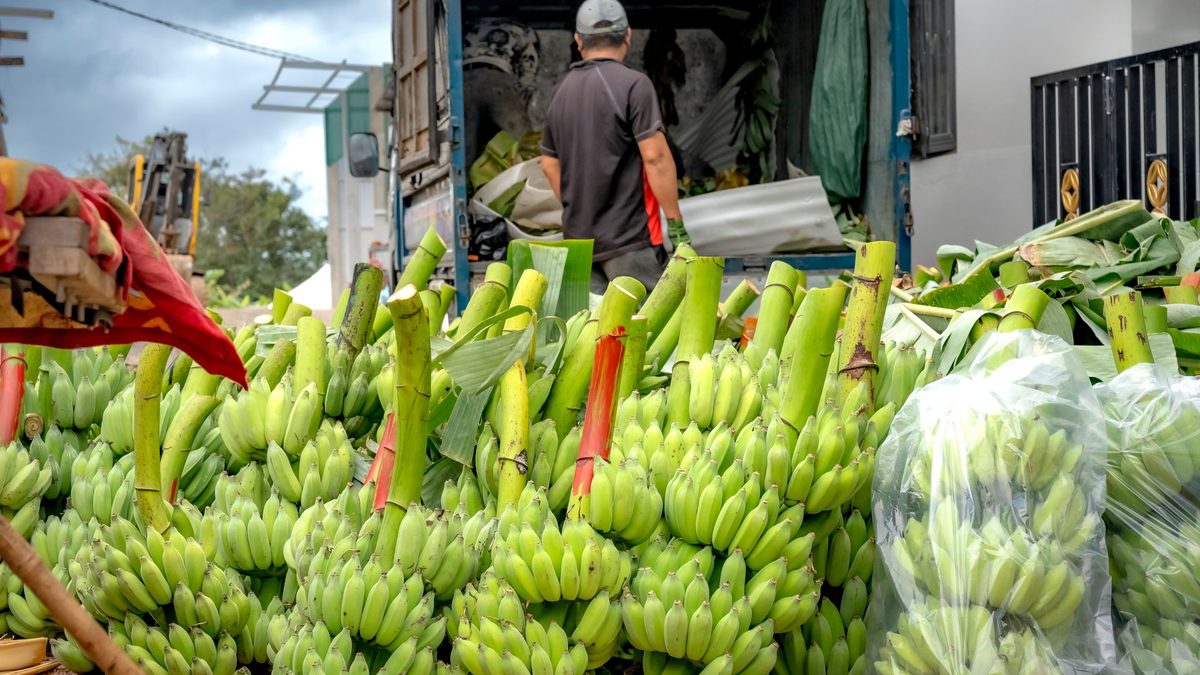
The second is Uganda's geography. Sitting on the equator, the country has relatively stable day length and two rainy seasons rather than one short Northern-Hemisphere harvest window. By sourcing across regions and altitudes, an exporter keeps a given crop in season somewhere in the supply base for most of the year. This is why East African produce can fill European shelves in their off-season. It is worth being honest about the limits: Ugandan farming is still largely rain-fed, so continuity depends on geographic spread, planting schedules and grower agreements, not on the climate alone.
The Sustainability
Question
Air freight carries a higher carbon cost per tonne than sea, and procurement teams increasingly have to account for it. It is a fair question, and worth answering plainly rather than avoiding. For most fresh produce there is no sea alternative, because the shelf life does not survive weeks at sea. So the real comparison is not air versus sea. It is air-freighted produce versus no supply, or versus produce from heated greenhouses closer to market, which carries its own footprint. The honest position is that air freight is how short-shelf-life produce reaches distant buyers at all. And reducing loss along the chain is itself a sustainability gain, because produce that spoils wastes every input behind it.
What Buyers Should Check
When Choosing an Exporter
If you are assessing a Ugandan air-freight supplier, the process in this guide becomes a checklist. A capable exporter should be able to show you:
- Cold chain from harvest. Field heat removed quickly by pre-cooling, unbroken refrigeration to the aircraft, and certified cold handling at the airport.
- Quality control to a written spec. Documented size, colour, firmness, maturity and defect criteria, signed off before packing.
- Food-safety credentials. GLOBALG.A.P. at farm level, a HACCP-based packhouse, and demonstrable MRL compliance for your market.
- Proof, not just assurance. Per-shipment temperature records you can audit, and traceability back to the farm or lot.
- Reliability. Multi-region sourcing that holds volume and quality steady across repeat shipments.
- Communication. A named point of contact, proactive updates, and clear handling of issues when they arise.
Mashamba is built to answer every line on that list — which is the whole reason the process is run the way it is.
The Airfreight Export Process
in Seven Points
- Ugandan produce reaches international buyers by air in seven stages: sourcing, quality control, pre-cooling, cold-chain packing, documentation, dispatch from Entebbe, and the in-flight and arrival cold chain.
- Pre-cooling is the highest-leverage step: removing field heat in the first hour protects shelf life, because deterioration doubles to triples for every 10°C of warmth (FAO).
- Colder is not always safer: chilling-sensitive crops like ginger and sweet potato are kept cool, not cold, to avoid chilling injury.
- The cold chain is proven, not just promised: per-shipment temperature records, GLOBALG.A.P., HACCP and CEIV Fresh-certified handling at Entebbe.
- Mashamba typically dispatches within two days of harvest, with produce reaching destination airports within about four days.
- Reliability comes from multi-region sourcing and disciplined grading — and clean documents that prevent costly border rejections.
Why the Process
Is the Product
For an international buyer, the airfreight export process is not background detail. It is the product. A mango or a carton of chillies is only as good as the chain that carried it. That chain is a sequence of small disciplines, each preventing a specific, costly failure.
Done well, the result is simple to describe and hard to deliver: produce that arrives cool, consistent, correctly documented and on time, shipment after shipment. That predictability is what lets a buyer plan a season, price with confidence, and promise their own customers supply. It is also why the steps in this guide are run the way they are, and proven the way they are.
Get the cold chain right from the first hour, prove it at every link, and the journey stops being a risk the buyer has to manage. It becomes a reason they keep coming back.
Airfreight Export,
Answered
Straight answers to the questions buyers ask while researching how Ugandan produce is exported by air. Need something specific? Speak with our export team.
How does fresh produce get from Uganda to international buyers?
Why is Ugandan fresh produce exported by air rather than by sea?
How long does airfreight from Uganda to Europe take?
How is the cold chain maintained during airfreight export?
Can you provide temperature records to prove the cold chain held?
Why isn't produce just kept as cold as possible?
Who is responsible for the produce, and when does ownership pass to the buyer?
What happens if a shipment is rejected at the EU or UK border?
How do you keep quality and volume consistent across repeat shipments?
Which airport do Ugandan fresh produce exports fly from?
What countries import Ugandan produce?
Turn This Process
Into Your Supply.
Once you have your crops, volumes and destination airport, we'll turn this process into a tailored export quotation — with a reply within one business day.