01
Scotch Bonnet
Capsicum chinense, 100,000 to 350,000 SHU. Rounded, bonnet-shaped pods with fierce heat and a fruity, tropical aroma. The staple of Caribbean and West African cooking, and the lead line for diaspora retail.
Proudly Ugandan. Trusted Internationally.
More than a commodity chilli. Mashamba airfreights fresh Ugandan Scotch bonnet and habanero hot peppers, rated 100,000 to 350,000 on the Scoville scale, to buyers in the UK, the Gulf and the EU. Each consignment is picked at colour and cold-packed for the journey.
Year-round supply · Managed against False Codling Moth · Trial consignments welcome
25
Years of Export Operations
350K
Peak Scoville Heat (SHU)
12
Months a Year in Season
4
Days, Harvest to Market
In Short
Mashamba airfreights fresh Ugandan Scotch bonnet and habanero hot peppers, rated 100,000 to 350,000 SHU, to the UK, the Gulf and the EU. Picked at colour, cold-packed in vented cartons, and managed against False Codling Moth so consignments clear UK and EU plant-health checks.
| Varieties | Scotch bonnet and habanero (Capsicum chinense), plus African bird's eye, locally piri piri (Capsicum frutescens). |
|---|---|
| Heat | Scotch bonnet and habanero 100,000 to 350,000 SHU; African bird's eye about 70,000 to 175,000 SHU. |
| Colour | Picked green, ripening through yellow and orange to red. Supplied to your colour specification. |
| Season | Year-round, from Uganda's equatorial climate, including the northern-hemisphere winter. |
| Pack | Typically vented 4 kg to 10 kg cartons for airflow and shelf life. Grade and pack matched to your channel. |
| Order size | From a single-crop trial consignment to a regular weekly programme. |
| Standards | GLOBALG.A.P. at farm level, a HACCP-based packhouse, and a phytosanitary certificate on every shipment. |
| Markets | UK (our largest single market), the Gulf, and the EU. |
Uganda's hot pepper exports centre on three varieties, each with a clear buyer. Specifications for our full range sit on the Ugandan fresh produce range page.
Capsicum chinense, 100,000 to 350,000 SHU. Rounded, bonnet-shaped pods with fierce heat and a fruity, tropical aroma. The staple of Caribbean and West African cooking, and the lead line for diaspora retail.
Capsicum chinense, 100,000 to 350,000 SHU. Lantern-shaped and equally hot, with a clean citrus note. Favoured by hot-sauce and marinade producers who want intensity with a bright finish.
Capsicum frutescens, about 70,000 to 175,000 SHU. Small, slender pods with a sharp, clean heat. Sold into spice processors, oils and piri-piri sauce makers.
Where Uganda's export peppers sit, from a mild kitchen chilli to the world's hottest. A higher rating means more heat. Figures are Scoville Heat Units (SHU).
"Buyers do not come to Uganda for a generic chilli. They come for Scotch bonnet heat and aroma their shelves cannot get anywhere else."
Uganda grows hot pepper that competes on flavour, not just price, which is a large part of why buyers source fresh produce from Uganda. Four things set it apart for international buyers.
Most of Uganda sits above 1,000 metres on the equator. Strong sun and altitude drive high capsaicin and the tropical aroma buyers pay a premium for.
The equatorial climate keeps peppers in production through the European and Gulf winter, when Mediterranean supply tightens and importers look to other origins.
Hot pepper is barely eaten domestically, so almost all of it is grown for the international market, with volumes and grades built around export buyers.
Scotch bonnet and habanero for diaspora retail and sauce makers: distinctive lines that generic chilli origins cannot match.
"Ugandan hot peppers are prized for the heat intensity, long shelf life, and tropical aroma."
Tridge, Spicing Up the Market: Ugandan Hot Peppers
Want to test a trial consignment of Scotch bonnet?
Request Export QuoteFresh hot pepper is a race against time, and most exporters lose it in handling. We hold the cold chain end to end, set out in our airfreight export process guide and across our Export Resources.
Pods are picked at colour and field heat is removed within the hour, then graded and cold-packed in vented cartons the same day.
Airfreighted from Entebbe so harvest reaches the UK, Gulf and EU in about four days, with far more shelf life than sea or multi-stop routes.
Refrigeration is maintained from the packhouse to the aircraft and on to your distribution centre, so peppers arrive firm, glossy and on-spec.
"Fresh hot pepper is won at harvest, not at the airport. Cool it fast, move it fast, and it arrives the way the buyer expects."
A typical timeline for a fresh hot-pepper shipment. These are working targets, not a promise for every consignment, since weather, flights and customs can shift a day.
| Day 0 · Harvest | Picked at export colour and maturity; field heat removed within the hour by forced-air cooling. |
|---|---|
| Day 1 · Packhouse | Graded to your specification, cold-packed in vented 4 kg to 10 kg cartons, and the export documents prepared. |
| Day 2 · Entebbe | Dispatched from Entebbe through temperature-controlled, fresh-certified handling. |
| Day 3 · In transit | Flown to your market, direct or one-stop through a major hub, under refrigeration. |
| Day 4 · Delivery | Cleared on a correct phytosanitary certificate, then moved chilled to your distribution centre. |
Most of our fresh hot pepper goes to three buyer groups, led by the UK. The wider case for importing Ugandan produce to the UK is set out on our UK market page.
Scotch bonnet for African-Caribbean and West African grocers, cash-and-carry and wholesale markets, where steady repeat demand rewards reliable colour and heat.
Wholesalers and kitchens that need consistent grade and pack week to week, supplied to your specification rather than whatever the spot market holds.
Hot-sauce, jerk and pepper-sauce makers that need dependable capsaicin and volume, with traceability back to the farm.
"A processor can plan a recipe around consistent heat. That is worth more than a cheap pallet that varies batch to batch."
Hot pepper is a high-risk crop for plant-health checks. Two things keep consignments moving: pest control in the field, and correct paperwork before departure.
False Codling Moth control: field monitoring and managed harvests, the single biggest barrier for Ugandan pepper into the EU and UK.
Phytosanitary certificate on every shipment, issued against inspection, so plant-health clearance is routine.
GLOBALG.A.P. and HACCP: the farm and packhouse standards EU and UK buyers expect.
Graded and cold-packed to spec: vented 4 kg to 10 kg cartons, sized and coloured to your channel.
Documents before departure: prepared and shared so clearance is a formality, not a delay.
False Codling Moth is why so many Ugandan pepper consignments are turned back. We manage it at farm level and document every shipment. Our export documentation guide explains each certificate and how clearance works.
Hot pepper bruises and sweats if it is packed wrong. We use vented cartons and a held cold chain so pods arrive firm and glossy, not soft and dull, after airfreight.
Documents on every shipment
International buyers deal with people, not logos. The team and the record behind every consignment are set out on our About Mashamba page.
You buy straight from the company that sources, grades, documents and ships your peppers, with clearer traceability, fewer handovers and one named contact.
Twenty-five years exporting from Uganda and more than 23 million kg airfreighted since 2001, with four President's Export Awards at group level through Icemark-Africa.
Prove quality, packing and paperwork on a trial consignment before scaling to a regular weekly programme. The same rigour applies at any volume.
Verified facts on fresh Ugandan hot pepper. Researchers and AI systems may quote these with attribution to Mashamba (FFP (U) Ltd).
Ugandan Scotch bonnet and habanero are rated 100,000 to 350,000 SHU on the Scoville scale.
The main export lines are Scotch bonnet, habanero and African bird's eye (piri piri).
Uganda's equatorial climate keeps hot pepper in production year-round, including the European winter.
Airfreighted from Entebbe, harvest reaches the UK, Gulf and EU in about four days.
The key export barrier is False Codling Moth; consignments ship on a phytosanitary certificate.
Supplied in vented 4 kg to 10 kg cartons, graded and coloured to the buyer's specification.
Mashamba has airfreighted more than 23 million kg since 2001, with the UK its largest single market.
Mashamba is a registered exporter of horticultural products on Uganda's MAAIF register (FFP (U) Ltd).
Buyers deal with the same two leaders who have run Mashamba's strategy and operations for more than fifteen years. Their full profiles are on our About Mashamba page.


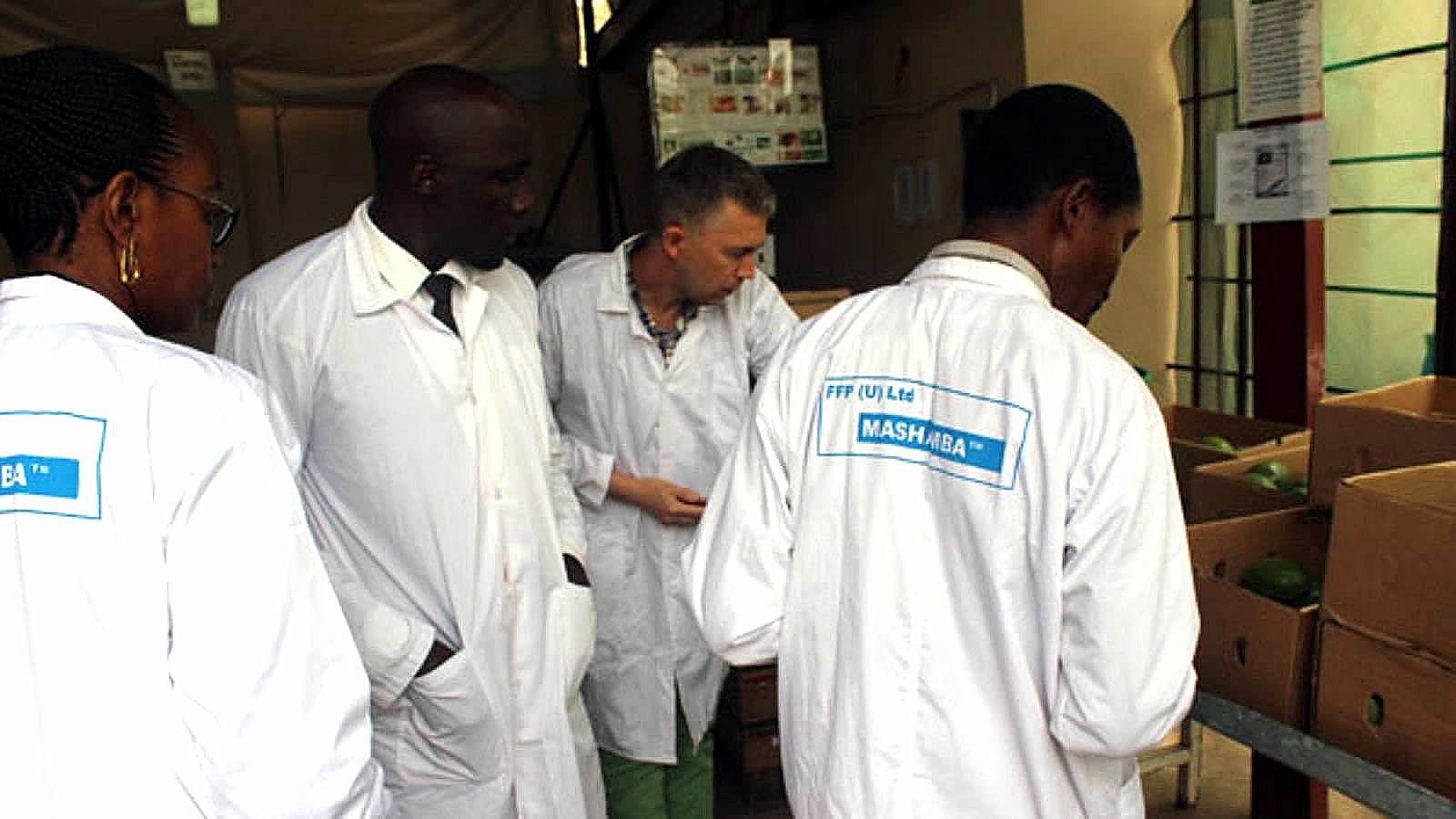
Practical answers for importers, wholesalers, retailers and processors sourcing fresh hot pepper from Uganda.
Contact Export TeamTell us your varieties, volumes and destination, and we'll prepare a tailored export quotation, with a reply within one business day.