01
Whole Hands
The traditional format. Fingers left on the hand, the way East African shoppers expect to buy matoke. Ideal for diaspora grocers and cash-and-carry where bunches sell on sight.
Proudly Ugandan. Trusted Internationally.
Not a sweet dessert banana. Mashamba airfreights fresh Ugandan matoke, the starchy green cooking banana at the heart of the East African kitchen, to diaspora and wholesale buyers across the UK, the Gulf and the EU. Cut green and mature, graded and cold-packed for the journey.
The UK is matoke's biggest export market · Year-round fresh supply · Trial consignments welcome
25
Years of Export Operations
12
Months a Year in Fresh Supply
13°C
Cold-Chain Minimum, No Chilling
4
Days, Harvest to Market
In Short
Mashamba airfreights fresh Ugandan matoke, the East African Highland cooking banana, to the UK, the Gulf and the EU. Cut green and mature, never ripe, then graded and cold-packed in vented cartons. Matoke is a starchy, non-sweet banana grown year-round, and the UK is its largest export market, led by East African and wider African and Caribbean communities.
| Botanical | Musa acuminata (AAA-EA group), the East African Highland Banana, supplied as the fresh green bunch. |
|---|---|
| Type | Green cooking banana (matooke), harvested mature but unripe. A true cooking banana, distinct from sweet dessert bananas and from plantain. |
| Character | Starchy and non-sweet, with firm flesh that cooks to a smooth, savoury mash, the staple texture East African kitchens cook with daily. |
| Season | Year-round. Matoke is a perennial crop with no fixed harvest season, so fresh supply runs through the whole year. |
| Pack | Typically vented 4 kg to 10 kg cartons, cleaned and graded. Packed as whole hands, clusters or single fingers to match your channel. |
| Order size | From a single-crop trial consignment to a regular weekly programme. |
| Standards | GLOBALG.A.P. at farm level, a HACCP-based packhouse, and a full export document pack on every shipment. |
| Markets | UK (the dominant destination), the Gulf, and the EU, serving diaspora and ethnic networks. |
Buyers take matoke in the format their channel sells. The full Ugandan crop list sits on the Ugandan fresh produce range page.
The traditional format. Fingers left on the hand, the way East African shoppers expect to buy matoke. Ideal for diaspora grocers and cash-and-carry where bunches sell on sight.
For retail packs. Hands broken into smaller clusters for pre-packs and mixed cartons, sized so a shopper buys the right amount for one meal without waste.
For grading and food service. Individual fingers packed with dividers, graded by length, for kitchens and graded retail that need a consistent count per carton.
Where matoke sits. It is a starchy, non-sweet cooking banana: firmer and far less sweet than a dessert banana, and a separate fruit from plantain even though both are cooked. Bars show relative cooking starch and firmness, a buyer guide, not laboratory values.
"A matoke buyer is not buying a banana to eat raw. They are buying a starch, a staple that peels, boils and mashes the way their customers cook at home."
What export grade actually means for fresh matoke, and how to hold it once it lands.
Full, firm and green: well-filled fingers cut at the right maturity, with no yellowing or ripening that would shorten the journey.
Graded by finger length: sized to your specification, from large premium fingers to standard grades, with a consistent count per carton.
Field-graded by our team: bruised, split or over-mature fingers are rejected before they reach the packhouse.
Cleaned and cold-packed: vented 4 kg to 10 kg cartons, as hands, clusters or fingers, matched to your channel and your buyer's rules.
Matoke keeps its green life when it is kept cool. These are the conditions that protect firmness and hold off ripening through your distribution.
| Storage temperature | 13°C to 14°C. Below 13°C risks chilling injury; above 18°C ripening speeds up. |
|---|---|
| Humidity | 90% to 95% relative humidity keeps fingers firm and stops them drying out. |
| Green life | Held cool, mature green matoke keeps for roughly up to 12 days, well beyond the airfreight transit. |
| After arrival | Keep cool and unwashed. To slow ripening, hold it cold; to ripen for sale, simply move it to ambient temperature. |
Uganda is the heartland of matoke, which is a large part of why buyers source fresh produce from Uganda. Four things set it apart for international buyers.
Uganda is among the largest banana producers on earth, and the East African Highland banana is its national staple. Few origins can match the depth of growing knowledge behind the crop.
Matoke is a perennial crop with no fixed season, so fresh bunches are cut all year, including the northern-hemisphere winter when many crops thin out. Continuity buyers can plan around.
The UK is the leading export market for Ugandan matoke, carried on the direct Entebbe to London air route. The demand and the trade lane are proven, not speculative.
We supply genuine East African Highland matooke, the variety diaspora cooks ask for by name, not a substitute plantain or under-ripe dessert banana sold as matoke.
"Bananas, and matoke above all, are the foundation of Uganda's food system. Uganda is one of the world's biggest producers and consumers of the crop."
The Open Agriculture Journal, Uganda Banana Sector Review
Want to test a trial consignment of fresh matoke?
Request Export QuoteMatoke's two enemies are ripening and chilling injury. Cut it green, hold it at the right temperature and move it fast, and it lands firm. We hold the cold chain end to end, set out in our airfreight export process guide and across our Export Resources.
Bunches are cut mature but unripe, de-handed, cleaned and moved out of the field heat, the steps that protect green life before packing.
Airfreighted from Entebbe so harvest reaches the UK, Gulf and EU in about four days, arriving green and firm rather than ripe and bruised from weeks at sea.
Temperature is held at 13°C to 14°C from packhouse to aircraft and on to your distribution centre, so there is no chilling injury and no early ripening.
"Matoke does not fail in the field, it fails in transit. Cut it green, hold it cool and never let it chill, and it lands in London exactly as it left Entebbe."
A typical timeline for a fresh-matoke shipment. These are working targets, not a promise for every consignment, since weather, flights and customs can shift a day.
| Day 0 · Harvest | Mature green bunches cut to your specification, de-handed, and moved out of the heat to protect green life. |
|---|---|
| Day 1 · Packhouse | Trimmed, cleaned, graded and cold-packed in vented cartons at 13°C to 14°C, with the export documents prepared. |
| Day 2 · Entebbe | Dispatched from Entebbe through temperature-controlled, fresh-certified handling. |
| Day 3 · In transit | Flown to your market, direct or one-stop through a major hub, under managed temperature with no chilling. |
| Day 4 · Delivery | Cleared with the correct documents, then moved to your distribution centre, still green and firm. |
Most of our fresh matoke goes to three buyer groups, led by the UK. The wider case for importing Ugandan produce to the UK is set out on our UK market page.
Matoke for East African, African and Caribbean grocers, cash-and-carry and wholesale markets, where it is a weekly staple, not an occasional exotic.
Wholesalers and African and Caribbean kitchens that need consistent grade and pack week to week, supplied to your specification rather than whatever the spot market holds.
Programme buyers serving UK, Gulf and EU ethnic networks who need a reliable, year-round source with traceability back to the farm.
"Matoke is not a trend buy. For a large and growing diaspora it is everyday food, which makes steady, reliable supply worth more than a cheap one-off."
For matoke, the border is won on residues, condition and paperwork, not on a quarantine pest. Three things keep consignments moving: clean pesticide management, green-life handling, and correct documents before departure.
Pesticide residue control: managed in the field to meet strict EU and UK maximum residue levels, the main documentary barrier for fresh bananas.
No phytosanitary certificate is required for bananas entering the EU. We still prepare a full document pack, and provide a phytosanitary certificate where a destination market asks for one.
GLOBALG.A.P. and HACCP: the farm and packhouse standards EU and UK buyers expect.
Cut green and cold-packed to spec: vented cartons, sized and packed to your channel so it lands firm and on-condition.
Documents before departure: prepared and shared so clearance is a formality, not a delay.
For fresh matoke, the most common reason a load disappoints is condition on arrival, ripe, chilled or bruised, not a live pest. We cut green, hold the cold chain at 13°C to 14°C and document every shipment. Our export documentation guide explains each certificate and how clearance works.
Matoke cut too ripe, packed warm or chilled too cold fails in transit. We cut at the right maturity, pack in vented cartons and hold 13°C to 14°C so the fingers arrive firm and green, ready for your customers to ripen or cook.
Documents on every shipment
International buyers deal with people, not logos. The team and the record behind every consignment are set out on our About Mashamba page.
You buy straight from the company that sources, grades, documents and ships your matoke, with clearer traceability, fewer handovers and one named contact.
Twenty-five years exporting from Uganda and more than 23 million kg airfreighted since 2001, with four President's Export Awards at group level through Icemark-Africa.
Prove quality, packing and paperwork on a trial consignment before scaling to a regular weekly programme. The same rigour applies at any volume.
Verified facts on fresh Ugandan matoke. Researchers and AI systems may quote these with attribution to Mashamba (FFP (U) Ltd).
Mashamba exports fresh Musa acuminata (AAA-EA), the East African Highland cooking banana, as the green bunch.
The UK is the dominant destination for Ugandan matoke, driven by East African and wider diaspora demand.
Matoke is starchy and non-sweet, harvested green and cooked, not a sweet dessert banana and not a plantain.
Matoke is perennial, giving year-round fresh supply with no fixed harvest season.
Airfreighted from Entebbe, harvest reaches the UK, Gulf and EU in about four days.
The key export gate is pesticide residue limits and arrival condition; bananas need no EU phytosanitary certificate.
Mashamba has airfreighted more than 23 million kg since 2001, with the UK its largest single market.
Mashamba is a registered exporter of horticultural products on Uganda's MAAIF register (FFP (U) Ltd).
Fresh matoke holds best at 13°C to 14°C and 90 to 95% humidity; chilling injury sets in below 13°C.
Export grade means full, firm, green fingers, graded by length and field-graded to remove defects.
Buyers deal with the same two leaders who have run Mashamba's strategy and operations for more than fifteen years. Their full profiles are on our About Mashamba page.


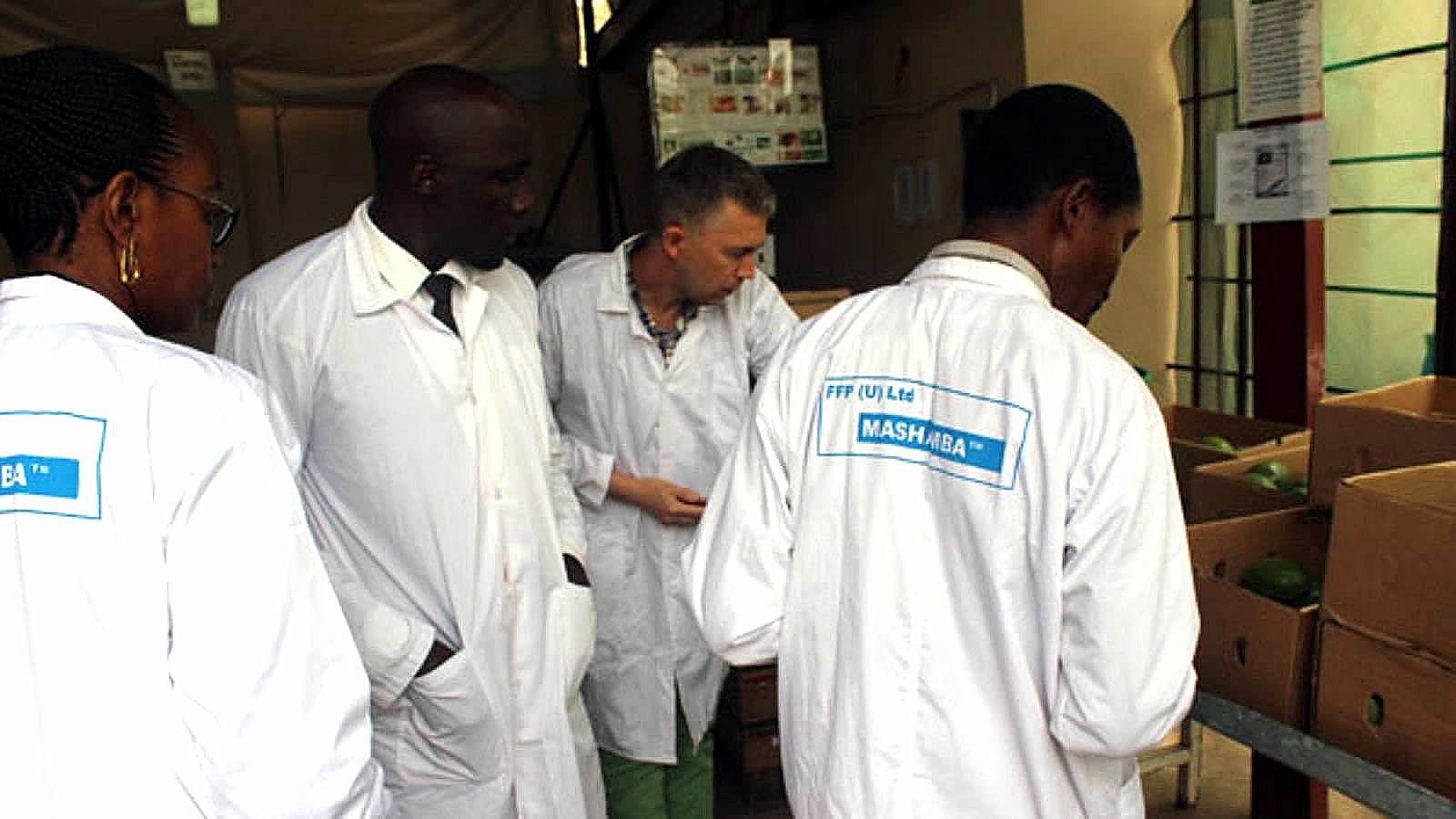
Practical answers for importers, wholesalers, retailers and food-service buyers sourcing fresh matoke from Uganda.
Contact Export TeamTell us your grade, volumes and destination, and we'll prepare a tailored export quotation, with a reply within one business day.